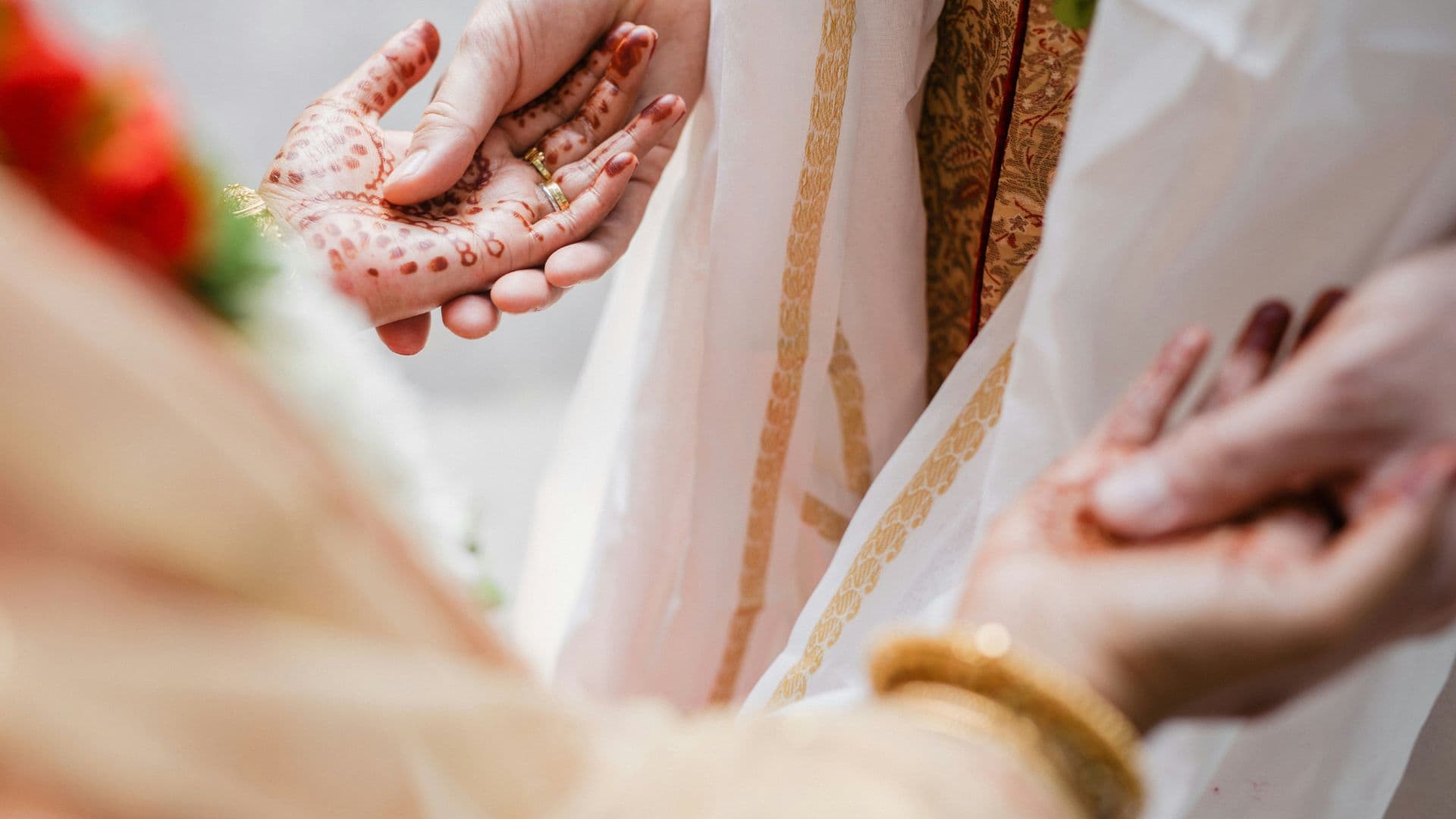
There is a kind of courage that doesn't make noise. It doesn't need a baraat of 200 people or a lehenga that costs six months' salary. It's the quiet courage of two people who look at each other and say: "You. Just you. That's enough."
If you are reading this, maybe you are that couple. Maybe you've chosen each other against the odds – different castes, different religions, different expectations from family. Or maybe you simply want something intimate, something real, something that's about the two of you and not about performing for 500 guests.
Either way, this guide is for you. The complete court marriage procedure in India (2026), simple wedding ideas that honor your love without breaking the bank, and real stories of couples who chose their own path – and never looked back.
Court Marriage in India: Everything You Need to Know (2026)
A court marriage is a legally recognized marriage performed under the Special Marriage Act, 1954. It is solemnized in front of a Marriage Officer (usually the Sub-Registrar) and three witnesses. No religious rituals required. No pandit, no maulvi, no priest – unless you want one separately.
It is available to every Indian citizen regardless of religion, caste, or creed. Hindu-Muslim, Sikh-Christian, intercaste, same-gotra – the Special Marriage Act doesn't care. It only cares that two adults have freely chosen each other.
Who Can Get a Court Marriage?
- Groom must be at least 21 years old
- Bride must be at least 18 years old
- Both parties must be of sound mind
- Neither party should have a living spouse (no existing marriage)
- Both must give free consent (no coercion or undue influence)
- Parties should not fall within the degree of prohibited relationship
Documents Required for Court Marriage
- Application form signed by both bride and groom
- Age proof: Birth certificate, Class 10th marksheet, or passport
- Address proof: Aadhaar card, Voter ID, Ration card, or Driving License
- Passport-size photographs (4-6 each, recent)
- Affidavit from both parties stating: date of birth, marital status (unmarried/divorced/widowed), and that they are not within prohibited relationship
- If divorced: Certified copy of divorce decree
- If widowed: Death certificate of former spouse
- Three witnesses with their ID proofs and photographs
- PAN card (required in some states)
Step-by-Step Court Marriage Procedure
Step 1: File Notice of Intended Marriage
Visit the office of the Marriage Officer (Sub-Registrar) in the district where at least one of you has lived for the past 30 days. Submit the application form with all documents and pay the prescribed fee (₹150-500 depending on state).
Step 2: The 30-Day Notice Period
This is the part that makes many couples nervous. After you file the notice, it is displayed on the notice board of the Marriage Officer's office for 30 days. During this period, anyone can raise an objection to the marriage.
The reality: Objections are rare. And even if someone objects, the Marriage Officer investigates and decides within 30 days. Frivolous objections (like "we don't approve of intercaste marriage") are dismissed. Only legally valid objections (like one party already being married) are upheld.
Privacy concern: Yes, the 30-day public notice has been criticized for exposing couples to family pressure. The Supreme Court has acknowledged this concern in recent cases. Some states now allow the notice to be displayed only at the office (not published widely). Discuss this with your Marriage Officer.
Step 3: Solemnization of Marriage
After 30 days (if no valid objection is raised), the marriage is solemnized at the Marriage Officer's office. Both parties, along with three witnesses, appear before the Marriage Officer. The couple signs a declaration and the marriage is registered.
The entire ceremony takes 15-30 minutes. It's simple, dignified, and legally binding.
Step 4: Marriage Certificate
The Marriage Officer issues a marriage certificate that is valid legal proof of your marriage across India. This certificate is recognized for all purposes: passport name change, joint bank accounts, property rights, visa applications, and more.
Court Marriage Fees
- Government fee: ₹150-500 (varies by state)
- Stamp paper for affidavit: ₹100-200
- Notary charges: ₹200-500
- Total (DIY): ₹500-1,200
- If using a lawyer/agent: ₹3,000-10,000 (for documentation assistance)
Yes, you read that right. A legally valid marriage in India can cost less than ₹1,500. Everything else – the celebration, the ceremony, the party – is your choice.
Court Marriage vs. Religious Marriage: Key Differences
- Court marriage: Under Special Marriage Act, 1954. Secular. No religious rituals needed. 30-day notice period. Valid for all religions and intercaste/interreligion couples.
- Religious marriage + registration: Under Hindu Marriage Act (for Hindus), or respective personal laws. Religious ceremony performed first, then registered at Sub-Registrar office within 60 days (in Delhi). No 30-day notice period.
Important: If both of you are Hindu, you can also register your marriage under the Hindu Marriage Act after performing a simple ceremony (even at home with a pandit). This avoids the 30-day notice period. Discuss with a lawyer which route works best for your situation.
Simple Wedding Ideas for Modern Indian Couples
A court marriage gives you the legal foundation. But what about the celebration? The joy? The moment where you look at each other and feel the weight of what you've chosen?
Here are ideas for couples who want something meaningful without the circus:
1. The Terrace Wedding (Under ₹2 Lakh)
Your own terrace. Fairy lights strung across the railing. 20-30 people who genuinely love you. A simple phera ceremony with a family pandit, or just your own vows read aloud. Homemade food – or catered from your favorite restaurant. A Bluetooth speaker playing your songs.
Cost: ₹50K-2 lakh depending on food and decor. Emotional value: priceless.
This is how Kritika Kamra and Gaurav Kapur got married – on a terrace, with close family, minimal decor, and maximum love. If it's good enough for them, it's good enough for anyone.
2. The Temple/Gurudwara Wedding (Under ₹1 Lakh)
A simple ceremony at a temple or Gurudwara. The priest performs the rituals. Your parents are there. Your closest friends witness it. You have lunch together at a nearby restaurant or at home.
Temple weddings are experiencing a massive surge – searches for "temple wedding India" have grown over 300% in 2026. There's something deeply moving about getting married in a sacred space without the noise of a DJ or the pressure of a stage.
3. The Cafe/Restaurant Celebration (Under ₹3 Lakh)
Do the court marriage or temple ceremony in the morning. Then host a lunch or dinner for 30-50 people at a beautiful cafe or restaurant. No decorators needed – the venue does the work. No DJ needed – the conversation is the entertainment.
Many restaurants in Delhi NCR, Jaipur, and Chandigarh offer private dining for 30-50 guests at ₹1,500-3,000 per plate. That's ₹75K-1.5 lakh for food, in a beautiful setting, with zero stress.
4. The Destination Elopement + Family Celebration
Get married legally (court marriage) with just your witnesses. Then take a trip together – Rishikesh, Kasauli, Jaipur, wherever your heart calls. Come back and host a simple dinner for family and friends to announce and celebrate.
This separates the sacred (your commitment to each other) from the social (the celebration with others). Both get their due, without either being compromised.
5. The Home Wedding (₹50K-3 Lakh)
Your parents' home. Or your own apartment. A small havan in the living room. Your mother's cooking. Your father walking you to the mandap that's set up in the drawing room. 15-20 people. Everyone crying because it's so intimate and real.
Home weddings are the most emotionally powerful celebrations we've seen. There's nowhere to hide behind decor or entertainment. It's just love, raw and visible, in the space where you grew up.
6. The "Two Celebrations" Approach
Many modern couples are doing this: a simple, intimate ceremony (court marriage + small puja) with immediate family, followed weeks later by a larger reception/party for the extended circle. This gives you:
- The sacred intimacy of a small ceremony
- The social joy of a bigger celebration
- Time to breathe between the two
- Budget flexibility (spread costs over time)
For Love Marriage Couples: Navigating Family Resistance
If you're reading this because your families don't approve – because of caste, religion, community, or simply because they had "someone else in mind" – this section is for you.
Your Legal Rights
Under Indian law, any two adults who meet the eligibility criteria can marry each other. No one – not parents, not community leaders, not panchayats – can legally prevent a marriage between two consenting adults.
The Special Marriage Act exists specifically to protect this right. It was created so that love could exist beyond the boundaries of religion and caste.
Safety First
If you face threats of violence or honor-based harm:
- File a police complaint immediately
- Contact the Women's Helpline: 181 or Police: 100
- Reach out to organizations like Love Commandos (for intercaste couples) or local legal aid services
- Consider getting a protection order from the court before filing the marriage notice
- Some couples file the notice in a different district for privacy
The Emotional Reality
We won't pretend this is easy. Choosing your partner against your family's wishes is one of the hardest things a person can do in India. The guilt, the silence, the WhatsApp messages that stop coming – it's a grief that nobody prepares you for.
But here's what we've seen, again and again: most families come around. Not all. But most. It takes time – sometimes months, sometimes years. But when a grandchild arrives, or when they see how happy you are, or when time simply softens the edges of their anger – most families find their way back to love.
Your job is not to convince them today. Your job is to build a life so full of love and dignity that they eventually want to be part of it.
Real Story: Ananya & Farhan's Court Marriage in Delhi (2025)
Ananya is Hindu. Farhan is Muslim. They met in college in Noida, fell in love over four years, and knew by their final year that this was forever.
Ananya's parents said no. Not because they disliked Farhan – they'd never met him. Because "log kya kahenge." Because "hamari community mein aisa nahi hota." Because fear is easier than courage.
They waited two years after college. Worked. Saved. Had countless conversations with both families. Farhan's parents came around first – his mother said, "If she makes you happy, she is our daughter." Ananya's parents remained silent.
In March 2025, they filed for court marriage at the Ghaziabad Sub-Registrar office. Three friends as witnesses. The 30-day notice period passed without incident. On April 22, they signed the register.
"It took 12 minutes," Ananya says. "Twelve minutes to make legal what we'd known in our hearts for six years."
That evening, they hosted dinner for 18 people – their closest friends and Farhan's parents – at a restaurant in Sector 18, Noida. Ananya wore her mother's old silk saree (the one thing she'd taken from home). Farhan wore a simple kurta. They exchanged garlands. Their friends read poems. Farhan's mother put sindoor on Ananya's forehead and cried.
Seven months later, Ananya's father called. He didn't say much. Just: "Beta, ghar aao. Dono aao."
They went. Her mother had made Farhan's favorite – rajma chawal. Nobody talked about the past. They just ate together, like a family.
"That dinner," Ananya says, "was our real wedding. The court marriage made us legal. But that rajma chawal made us family."
Making Your Simple Wedding Beautiful: The Invitation
Whether it's a court marriage with 5 people or an intimate celebration with 50, your guests deserve to know they're part of something special. A beautiful invitation sets the tone – it says: this may be small, but it is significant.
A digital invitation from NIMNTRN works perfectly for intimate weddings:
- For court marriages: Share the date, time, and Sub-Registrar office address with your witnesses. Add a personal note about what this means to you.
- For small celebrations: Include the ceremony details, venue map, and a heartfelt message. Your 20 guests will feel more honored than 500 guests at a big wedding ever do.
- For the "two celebrations" approach: Send one invitation for the intimate ceremony (close family) and another for the larger reception later.
- RSVP tracking: Even for small weddings, knowing exactly who's coming helps with food planning and seating.
The most beautiful invitations we've seen aren't the most expensive ones. They're the ones that say something true. "We chose each other. Come witness our beginning."
Court Marriage Checklist: Your 6-Week Timeline
Week 1-2: Preparation
- Gather all documents (both parties)
- Get affidavits prepared on stamp paper (any notary can do this)
- Confirm your three witnesses and collect their ID proofs
- Identify the correct Sub-Registrar office (based on 30-day residency)
- Optional: Consult a lawyer if your situation is complex (intercaste, family opposition)
Week 2-3: Filing
- Visit the Sub-Registrar office together
- Submit application form with all documents
- Pay the prescribed fee
- Get the notice filing receipt (keep this safe)
Week 3-6: The 30-Day Wait
- Plan your celebration (if any) for after the solemnization date
- Create your digital invitation for witnesses and guests
- Shop for what you'll wear (keep it simple and meaningful)
- Plan a small dinner or gathering for after the ceremony
- Breathe. The hardest part (deciding) is already done.
Week 6+: Solemnization Day
- Arrive at the Sub-Registrar office with both parties and three witnesses
- Sign the declaration in the prescribed format
- Marriage Officer solemnizes the marriage
- Collect your marriage certificate
- Celebrate. You're married. 🎉
After Court Marriage: What to Update
- Aadhaar card: Update name/address at any Aadhaar center
- PAN card: Update name online via NSDL/UTIITSL
- Passport: Apply for reissue with new name (if changing)
- Bank accounts: Update name, add spouse as nominee
- Insurance policies: Update nominee details
- Voter ID: Update address if moving
- Office HR: Update marital status for tax benefits
आखिरी बात: Your Love Is Valid
In a country that often measures love by the size of the wedding, choosing simplicity is its own kind of revolution. It says: we don't need 500 witnesses to know this is real. We don't need a stage to feel seen. We don't need a DJ to feel joy.
We just need each other. And a few people who believe in us.
Whether you're getting a court marriage because it's the only option available to you, or because it's the option you actively chose – know this: your marriage is no less sacred, no less valid, no less beautiful than any wedding with a thousand guests.
The size of your wedding says nothing about the size of your love. And the people who understand that? They're the only ones who matter.
Start your journey with a beautiful invitation. Even if it's just for 5 people. Even if it's just for your witnesses. Make it beautiful. Because your love deserves beauty – in every form, at every scale.
Create your invitation on NIMNTRN – free templates available for intimate celebrations, court marriages, and simple weddings. No credit card required. Just love, made visible.